Briefing
Penetration testing metrics that show progress, not activity
Penetration testing metrics are the few numbers that show whether testing is making the organization safer. The best ones measure what changed after a test, rather than how much testing was bought.
- Principal-led mandates
- Fixed fee agreed in writing
- Nothing retained afterwards
Why most penetration testing metrics mislead
A count of findings is easy to report. However, it rises when testing improves and falls when scope shrinks, so it says little on its own.
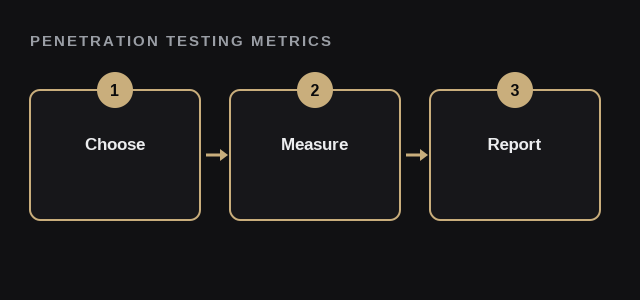
Therefore choose numbers that track outcomes. For example, how quickly serious findings are fixed tells leadership far more.
Penetration testing metrics worth reporting
Keep the list short. Four or five numbers, reported the same way each cycle, are enough for most boards.
Then show each one as a trend. As a result, the direction is visible even when the numbers are small.
| Metric | What it shows |
|---|---|
| Time to fix by severity | How fast serious issues close |
| Repeat findings | Whether causes are being fixed |
| Coverage of the cycle | Share of planned systems tested |
| Open accepted risks | What leadership has chosen to carry |
| Retest pass rate | Whether fixes hold |
Metrics review list
Tick each measure your reporting already includes.
Your result appears here as you tick, so you can see what is still open.
Penetration testing metrics to avoid
Avoid numbers that reward the wrong behavior. For example, a target for fewer findings can push teams to narrow the scope.
Also avoid comparing raw counts between providers. Because methods differ, the comparison is rarely fair.
Collecting the data
Most of the data already exists in your ticket system. So the work is agreeing definitions once, then reading them the same way each cycle.
In addition, record when each finding was reported and when its retest passed. Those two dates drive most of the list.
Presenting penetration testing metrics
Lead with one sentence: are we safer than last cycle? Then show the numbers that support it.
Also explain any jump. A spike after a scope change is expected, and saying so early prevents a wrong conclusion.
What each mandate gives you
Every finding comes with the route, the evidence and the remedy, and the retest is included. So the dates your metrics need are on record. Afterwards, evidence and findings are destroyed, and your own records hold the history.
Full mandates run from $35,000 to $120,000, while the floor is $25,000. Also, the bounded Exposure Assessment starts at $4,500. Moreover, its fee is credited in full against a full engagement commissioned within ninety days. One fixed fee is agreed after the written scoping brief, and it is invoiced against milestones.
Penetration testing metrics questions
Which penetration testing metrics matter most?
Time to fix serious findings and the rate of repeat findings.
Should penetration testing metrics include finding counts?
Only with context. On their own, counts mislead.
How often are penetration testing metrics reported?
After each testing cycle, as a trend.
Where does the data come from?
Mostly your ticket system and the retest results.
Related guides
Request an introduction
Tell us what your board asks about testing today. A senior professional hacker replies within one business day when the mandate is a fit.
Request an introduction